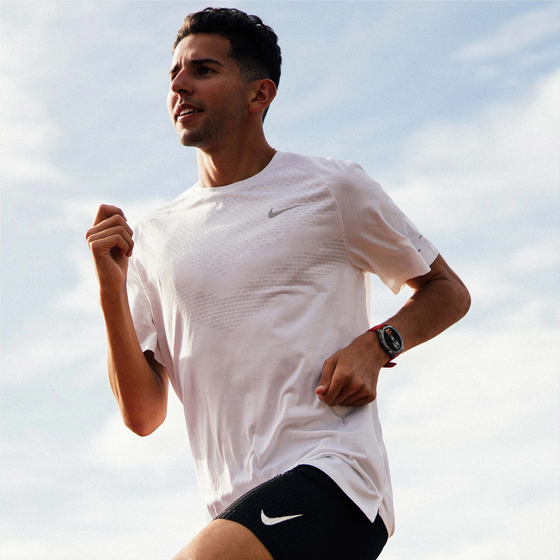
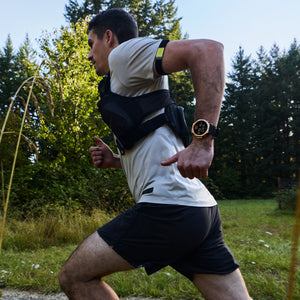
For most ultrarunners, finishing a 200-mile race would be an extraordinary feat in itself. For Amazfit ambassador Aaron Kubala, it's one part of a larger goal: The Triple Crown of 200s.
When Amazfit first brought Aaron on to the team, he told us early on that he had this record in mind. We were happy to support him and put the
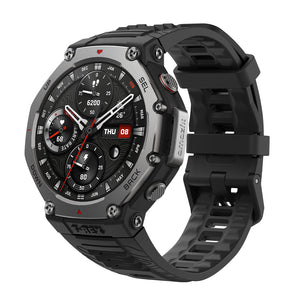
Cheetah 2 Ultra to the test across the most challenging ultra-endurance record yet.
Read below to learn about this incredible endeavor, what it takes in training and recovery, and the recent challenge Aaron faced at the Bigfoot 200 and still overcome to stay ahead of the record.
What Is The Triple Crown of 200s?
The Triple Crown of 200s consists of three of ultrarunning's longest races: the Tahoe 200 in mid-June, Bigfoot 200 in August, and Moab 240 in early October. The Triple Crown undertaking is a massive ask--racing all three 200s in a span of 4 months requires intense preparation and dedicated recovery. There simply isn't enough time to take time off and start a new training block, therefore, the training begins much earlier in the year and it's more about maintaining versus peaking.
"The bulk of my training comes January to June because in between these races, you don't want to overtax yourself. You can't really get a good training block in in a month and a half," Aaron explained. "It's a mix of getting in the miles, but also deliberately dialing it back if the health metrics aren't there."
The current Triple Crown record is held by Kilian Korth in 156:30:20 (about 6.5 days) set in 2025. He won all three races that year, completing the sweep. The women's record is held by Manuela Vilaseca in 201:02:06 (about 8 days) set in 2025. What's unique about the Triple Crown record is that it is cumulative time over all races, so technically you can place 2nd in one race and still be on track to set the record, or you can be slower in one race versus the other.
Aaron's Course Record Win At The Tahoe 200
This past June, Aaron set the course record at the Tahoe 200 in 48 hours, 9 minutes, and 30 seconds, breaking the previous record by 1 hour and 17 minutes. His win and record at Tahoe put him in the position he needed to be in with one race down and two to go.
His Amazfit data told the full story of exertion over the 2 days:
-
14:51 min/mile average pace
-
126 bpm average heart rate
-
32,897 feet in elevation gain
-
348,581 steps
-
9 minutes of sleep
-
25,323 calories burned
 Aaron's Penalty And Win At The Bigfoot 200
This past weekend, Aaron set out to chase another course record and win at the Bigfoot 200. While he still won in a time of 47 hours and 20 minutes, he didn't set the course record and faced an unexpected challenge that cost him a 3-hour penalty. What exactly happened?
Around mile 150, Aaron's pacer had to stop and fell behind after experiencing back spasms without Aaron's knowledge. He spent about 10 minutes searching for his pacer and calling his name before continuing to the aid station where his crew could help. Unfortunately, the rules of the race state that you must stay with your pacer at all times (this rule differs from race to race, for example, this is not a rule at Western States). Aaron says he wasn't trying to gain an advantage by moving ahead. He believed the safest thing to do was get to the aid station so his crew could contact his pacer using a satellite and figure out what was happening.
"My emotions were all over the place," Aaron said. "It probably took me 45 minutes to calm down because I was so charged up. I was caffeinated, I didn't know what was going on. Eventually I thought, 'Well, there's nothing I can do. I have to accept this.' So I took a nap. I slept for an hour and a half, and then I got back out there and ran the rest of the race."
Although he was 90 minutes ahead of record pace, the race told him he needed to take a 3-hour penalty. Despite losing 3 hours, he still won the race and finished 6 hours ahead of the 2nd competitor on an arguably much harder course. The course had to be changed slightly this year due to fire damage and re-routing in some areas, making direct comparisons to previous records not a 1:1 situation.
Despite it all, Aaron still remains 2 hours and 14 minutes ahead of the total Triple Crown record time, and is still on his way to achieving his goal.
The Training, Recovery, And Sleep For 200-Mile Ultramarathons
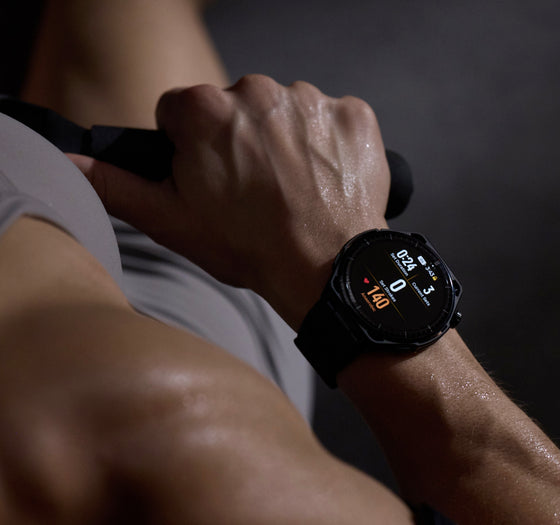
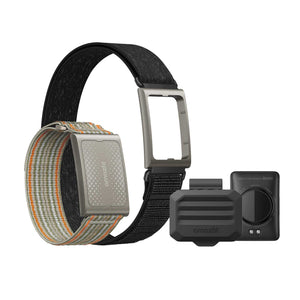
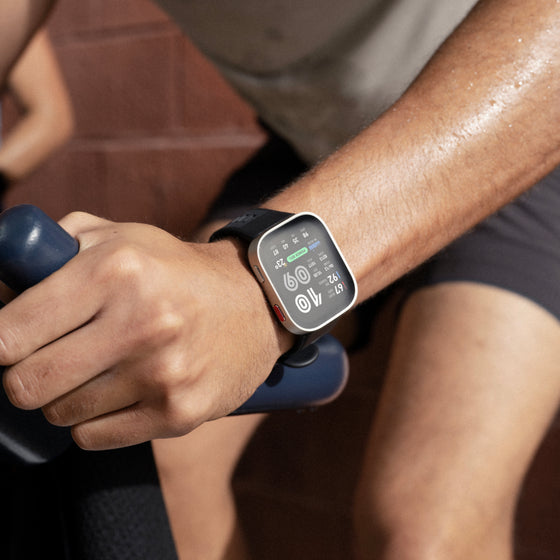
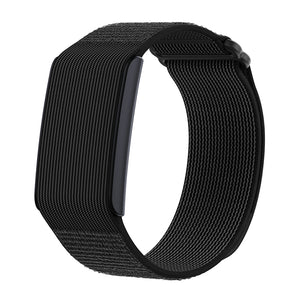
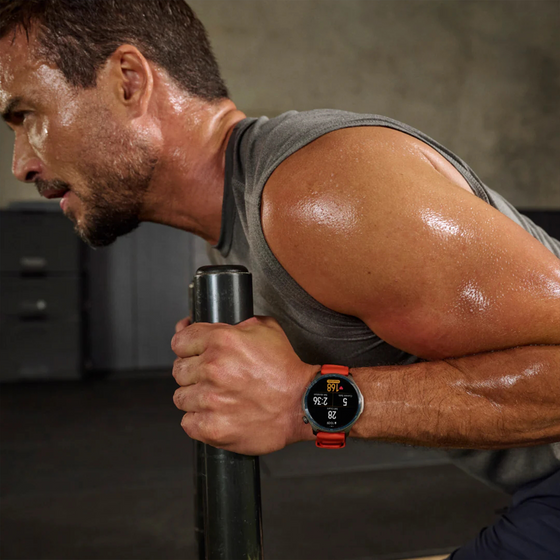
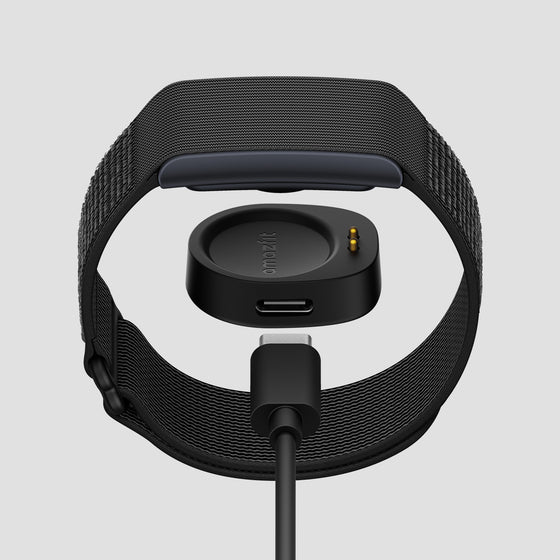
Aaron uses the full suite of Amazfit products including the Cheetah 2 Ultra, Helio Strap and arm band. Every activity from running, strength training, and pliability is monitored. "You can't train for two hundreds without cross-training, strength training, and pliability. I log almost all of that on my watch and Strava. I usually try to do a 30-minute pliability session every day where I'll do core, stretching, foam rolling, and just address things for 30 minutes. I'll log that on my Amazfit watch."
-
Total mileage for the year: 2,523 miles
-
Total Amazfit activities for the year: 497
-
Average weekly mileage: 80-85 mpw
-
Peak mileage: 100 mpw
-
Peak sleep: 10 hours
-
Average HRV: 84
-
HRV before the race: 108
Sleep is the most important thing for Aaron leading into the race, since he doesn't sleep once the race begins, except for a few brief naps here and there. "A big part of my strategy for these races is to front-load sleep the week before. I prioritize 9 to 10 hours a night for four days before the race."
"The heart-rate monitor in racing is super helpful because I modulate my effort based on whether I'm above a certain threshold, at least during the first 100 to 150 miles of the race," he explained.
The Final Race: Chasing The Record At Moab 240
With Tahoe and Bigfoot behind him, Aaron's training strategy has changed. There isn't enough time before Moab to build another massive block, so the priority now is maintaining his fitness while making sure his body is ready for one final race.
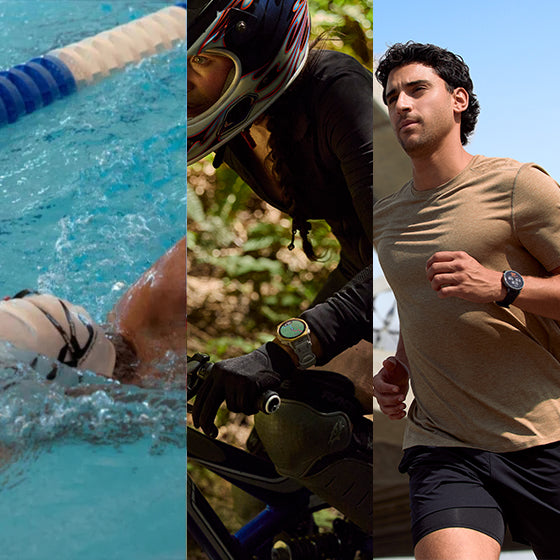
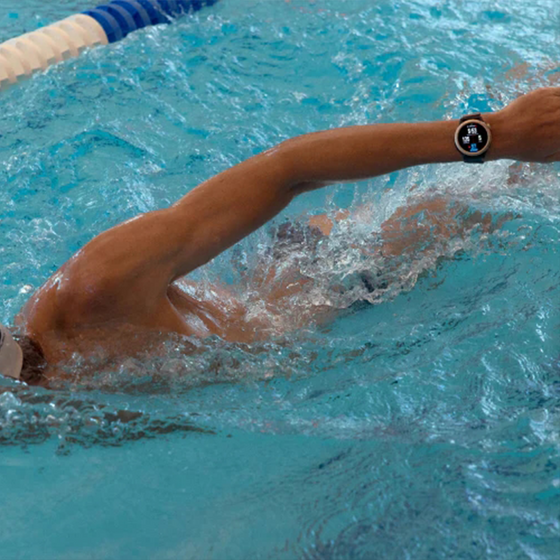
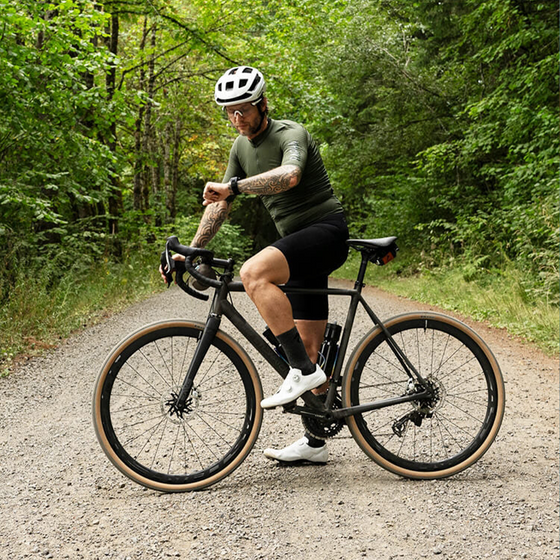
He plans to build toward roughly a 90-mile week before backing off again, supplementing his running with biking and swimming. He's also treating a two-week trip to Chamonix as an opportunity to continue training while putting recovery first.
"The main thing is just prioritizing recovery and making sure all systems are a go,” Aaron says. "That means continuing to focus on stretching, pliability and light strength work rather than trying to squeeze in unnecessary mileage." Moab also gives Aaron one advantage he didn't have for his other races: he's run the course before and knows exactly what it demands.
“If I could still get the record despite a 3-hour penalty, despite two harder courses, that's a statement,” Aaron says.
We look forward to tracking his training and race prep heading into Moab, and can't wait to share more.