
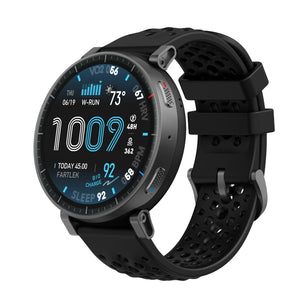
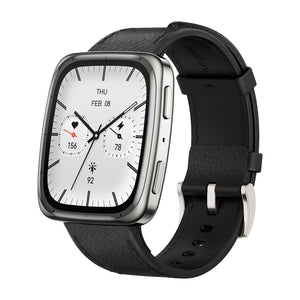
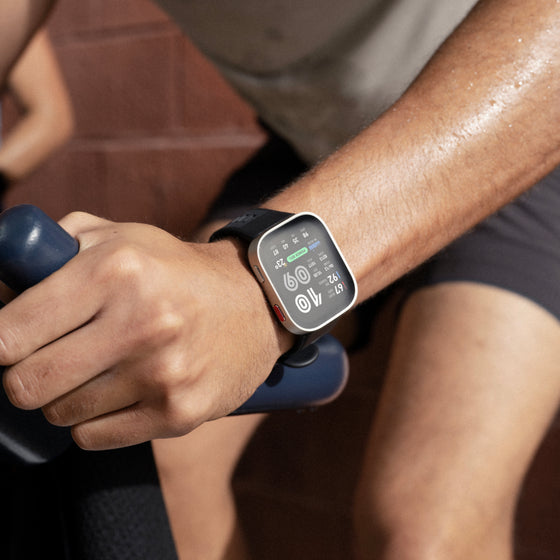
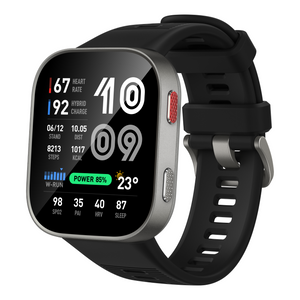


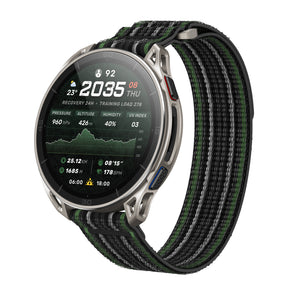
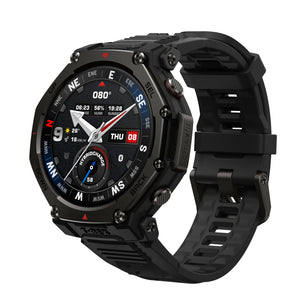


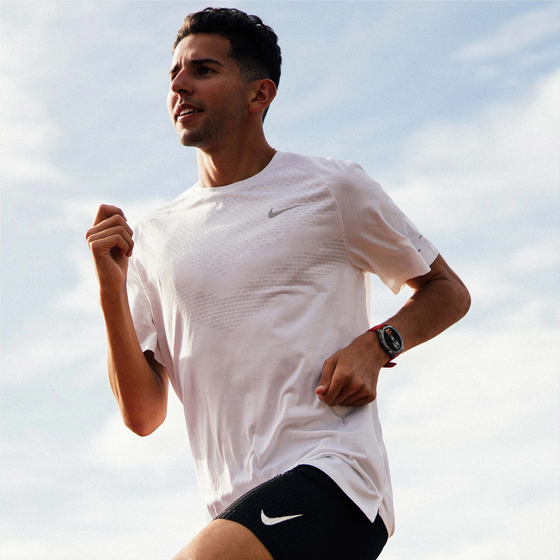

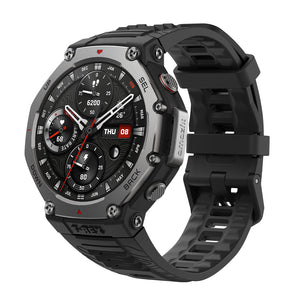












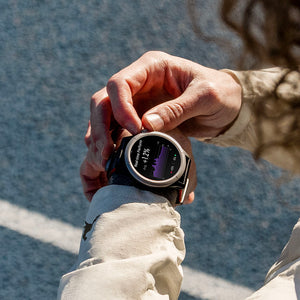



33 Hours: Full Feature Trail Running Mode
This is the setup for runners who want the complete trail experience with nearly everything active.
In this mode, the watch is running:
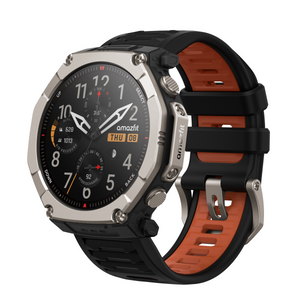
- Always-On Display enabled
- Dual-frequency GPS with all satellite systems enabled
- Offline maps and navigation with turn-by-turn active
- Voice prompts enabled
- Continuous heart rate monitoring active
- Regular wrist raise wakeups throughout the run
This setup delivers up to 33 hours of battery life while keeping the full AMOLED experience intact. It’s ideal for runners who prioritize readability, constant access to maps, and quick visibility during technical terrain or overnight sections where glancing down at your wrist quickly matters.
The built-in flashlight also becomes especially useful here during alpine starts, technical descents after sunset, or aid station transitions at night. Like any active feature, though, frequent flashlight usage will naturally contribute to additional battery drain over time.
For many runners, 33 hours already covers the majority of races they’ll ever do, including:
- Most 50Ks
- 50 milers
- Mountain 100Ks
- Long training adventures
- Fast mountain 100s
The tradeoff is simple: better visibility and more active features in exchange for shorter battery runtime.
 48 Hours: Balanced Ultra Distance Setup
This is probably where many experienced ultrarunners will land. The goal here is preserving battery without sacrificing the core features trail runners actually rely on during long races. In this setup, the watch still keeps:
- Dual-frequency GPS enabled
- All satellite systems enabled
- Continuous heart rate monitoring active
- GPS Navigation running with turn-by-turn navigation
But a few battery-heavy features are reduced or disabled:
- Always-On Display turned off
- Voice prompts turned off
- Map page left idle most of the time
- Screen brightness reduced to around 50%
- Less unnecessary screen wake activity
That combination stretches battery life to 48 hours while still maintaining highly accurate GPS tracking and full navigation support when needed.
Realistically, this setup feels closest to how many ultrarunners actually race. Most people are not staring at their watch every few seconds, and disabling features like Always-On Display alone for the AMOLED screen makes a surprisingly large difference during long efforts. Keep in mind, the more you use the map screen/navigation, the more the battery drains due to the constant refresh.
This mode was specifically designed to comfortably cover even the longest UTMB cutoff times, which feels far more realistic than generic “best case scenario” battery claims.
For races where you need a balance between performance, navigation, and longevity, this becomes the sweet spot.

60 Hours: GPS Precision Mode
For runners who care most about GPS accuracy but still want significantly longer battery life, Precision Mode becomes a strong middle ground.
This setup keeps:
- Dual-frequency GPS enabled
- All satellite systems active
- Continuous heart rate monitoring active
- Full GPS precision tracking without turn by turn navigation
But reduces:
- Always-On Display OFF
- Voice prompts OFF
- Extra screen activity
- Navigation OFF
- Unnecessary background features
This pushes battery life to up to 60 hours while still prioritizing GPS consistency and accurate route tracking in difficult environments like dense forest, alpine terrain, canyons or mountain valleys where signal reliability matters most.
For runners tackling long mountainous races where navigation accuracy matters more than visual extras, this setup offers a really strong balance.

80 Hours: Ultra Long Distance Trail Setup
This setup is designed for the truly long efforts where battery preservation becomes part of the race strategy itself.
Think:
- 100 milers with long cutoff times
- 200-mile races
- Multi-day adventures
- Fastpacking routes
- Long mountain traverses
In this mode, the watch shifts toward efficiency while still preserving core tracking features.
The setup includes:
- GPS switched to power-saving single-frequency mode
- Heart rate monitoring still enabled
- Always-On Display turned off
- Voice prompts disabled
- Reduced map activity
- Screen brightness lowered to around 50%
- Limited screen wakeups
That combination extends battery life up to 80 hours while still allowing runners to preserve GPS tracking and core performance data throughout extremely long efforts.
At that point, most runners care far more about making it to the finish with reliable tracking and navigation than keeping every visual feature fully active. Battery life is no longer just about having the biggest number possible. It’s about understanding how your settings impact the type of experience you want on race day.
Some runners will prioritize full maps, AMOLED visibility, and voice prompts. Others will happily disable a few convenience features to make sure their watch comfortably survives a two-day effort in the mountains.
The important part is having the flexibility to choose.
Because once you’re deep into a race, exhausted, climbing through the dark, and relying on your watch to help guide the race you've trained months for, confidence matters more than specs ever will. The best battery mode depends entirely on the type of effort you’re heading into.