





















Personal health information can reveal a detailed record of the body, habits, movement, and daily life. At Amazfit, we believe that information should remain under the user’s control.
Beginning with Zepp App 10.8.5 software release, Amazfit is introducing expanded controls that allow users to make more informed choices about how their personal health and fitness data is synchronized with the Zepp cloud.
This release is the first phase of a broader Privacy & Transparency Initiative built around a simple principle:
Your Data. Your Storage. Your Choice.
Privacy Should Be a Choice, Not a Compromise
Cloud services can provide valuable benefits, including synchronization across devices, automated backup, account recovery, connected services, and cloud-powered experiences. However, using those services should come with clear information about what data is being synchronized and how that choice affects the product experience.
Amazfit is taking a local-first, cloud-optional approach. This does not mean eliminating cloud services. It means giving users greater control over when and how those services are used while continuing to support the core health and fitness experiences that make their devices valuable.
More Control Over Cloud Synchronization
With Zepp App 10.8.5 software release, users can independently manage cloud synchronization for three categories of information:
-
Personal Profile Data
-
Health Data
-
Workout Data
Each category can be enabled or disabled independently. This provides greater flexibility than a single all-or-nothing cloud synchronization setting.
For example, a user may choose to synchronize workout information while keeping another supported category stored locally. These choices can be adjusted as individual needs and preferences change.
Clearer Information Before a Setting Changes
Meaningful control requires more than presenting users with a switch.
When a synchronization setting is changed, the Zepp App provides information explaining:
-
What data will or will not be synchronized.
-
Which experiences may rely on cloud processing.
-
What functionality may change when synchronization is disabled.
-
Potential implications for data retention and recovery.
-
What will happen before the selection takes effect.
These explanations are intended to help users understand the practical impact of each decision before confirming a change.
Disabling future synchronization is also different from deleting information that may already be stored in the Zepp cloud. Where applicable, users should review the information presented in the Zepp App and use the available privacy controls to manage previously synchronized data.
A Local-First Experience
When cloud synchronization is disabled for a supported category, new information within that category remains stored locally and is no longer uploaded to the Zepp cloud.
Most on-device health and fitness experiences will continue to function. However, some capabilities depend on cloud processing or access to cloud-stored information. Depending on the category selected, disabling synchronization may affect features such as:
-
Cloud backup.
-
Account recovery.
-
Cross-device synchronization.
-
Certain cloud-powered insights or AI capabilities.
-
Online, community, and connected services.
The Zepp App will provide more information about affected functionality before a synchronization change takes effect.
Local-first does not mean cloud-prohibited. It means cloud processing should be used when it adds clear value and when the user chooses to use it.
Cloud Services Remain Available
Users who value the convenience of cloud synchronization can continue using Zepp cloud services.
These services can support automatic synchronization, recovery, continuity across devices, and connected experiences. The purpose of the new controls is not to suggest that cloud storage is inherently unsafe or unnecessary. It is to provide a clearer choice between local storage and cloud-enabled convenience.
Privacy and a high-quality product experience should be able to coexist.
Building on an Existing Foundation
This direction did not begin with Zepp App 10.8.5 software release.
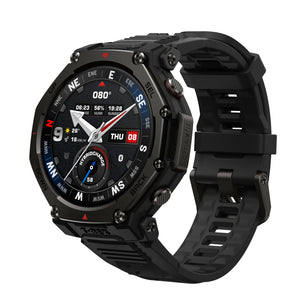
In 2024, Amazfit T-Rex 3 introduced user-controlled options for GPS and workout data, including different cloud-storage selections, local backup, user-selected backup methods, and activity-file export.
The first phase of the Privacy & Transparency Initiative builds on that foundation by extending user-controlled synchronization across additional categories of personal information in the Zepp App.
What Comes Next
This release is the first step in a longer-term initiative.
In a future phase, Amazfit plans to expand data portability through export and restoration capabilities for supported personal information. The goal is to provide more than a static archive for download. Where technically compatible, exported information should be restorable so users can preserve supported historical records and continue using them to understand longer-term trends.
Because locally stored and cloud-stored information are managed separately, future export and restoration experiences may require separate archives and import processes. Additional details about supported data, compatibility, availability, and instructions will be shared when Phase 2 is ready for release.
The initiative will also be supported by improvements beyond the app experience, including:
-
A clearer and better-organized Privacy Policy.
-
Additional feature-specific privacy notices where appropriate.
-
More accessible regional privacy information.
-
Improved privacy-support content.
-
Clearer guidance about data storage, synchronization, and user choices.
A Long-Term Commitment to User Control
Amazfit believes that protecting personal health information requires more than securing data after it has been uploaded to the cloud. It also requires asking whether the information needs to be uploaded, where it should be stored, who can access it, and whether users can change those choices over time.
Our long-term direction is built around six principles:
-
Local-first processing where practical.
-
Optional cloud services.
-
User-selected storage.
-
Meaningful data portability.
-
Data minimization.
-
User-authorized sharing.
This is not a one-time privacy update. It is the beginning of a broader effort to give users greater visibility and more meaningful control over their personal health and fitness information.
Your Data. Your Storage. Your Choice.
For additional information about privacy controls, data storage, and available user choices, visit the Amazfit Privacy Support Center.